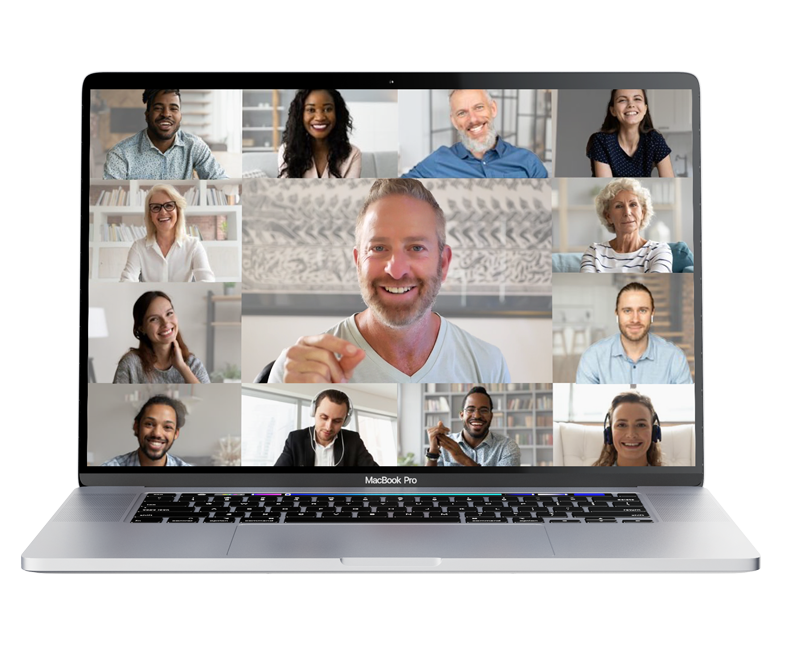



Leaving corporate can feel like freedom, until you hit the point where building your next chapter can feel incredibly lonely. In this episode, Chris and Todd tackle a ReInvention challenge most people don’t see coming: Isolation – and how being isolated quietly drains your energy, creativity, and momentum when you’re launching something new.
In this episode you’ll get practical, real-world strategies to stay connected while working independently that include a few JEDI techniques to spurn amazing creativity:
- Integrating 2–3 non-work anchors (sports, classes, hobbies) into your weekly rhythm
- Using walks and neighborhood connection as a daily reset
- Changing where you work (cafes, coworking, “micro-commutes”)
- Creating intentional “CEO-level” work trips (conferences, meetups, learning rooms) to replace the structure corporate used to provide.
We also talk about how to use technology as a tool for real rapport, not transactional Zoom fatigue – and why being proactive about connection isn’t a luxury but part of your ReInvention plan.
If you’re reinventing your career, starting a business, consulting, or building a portfolio career, this episode will help you stay human, stay motivated, and build community on purpose.
If this conversation resonates with you, visit ReInvention.biz to explore our guided workbook and join a community of people just like you – people designing what’s next.
**Subscribe to the ReInvention Podcast to stay plugged into fresh ideas, frameworks, and real-world tools for navigating the future of your work and life.
Episode Transcript
Todd: Having varied interests and habits and building that into my daily routine actually makes my work more productive. I’m more efficient. It’s this weird thing that you need to learn.
All right. All right, Chris, my brother. What is on the docket today for reinvention? What are we talking about?
Chris: Today, man, we’re talking about an issue that might not be obvious to people when they’re reinventing their career, but it’s critical to proactively address, especially if you’re launching your own business after years of working in a corporate environment.
And that is, loneliness. Cause at the beginning of the reinvention process, most of us are really excited. We’re hanging our shingle, we’re building our new business. We’re finally getting away from that guy in the office who stops by to chat at 4:59 every day. And that initial burst of excitement propels us for a little bit.
But then usually we find ourselves all alone building this new concept from scratch. There’s no one to bounce ideas off of. There’s no spontaneous water cooler conversations, you know, and it’s really easy to fall into this lonely, unproductive space. Your only friend is chat, GPT. you start to miss that guy who stopped by to chat at 4:59, And this isn’t unique to Reinventors, right? This is actually in our society right now, we’ve heard this phrase, the loneliness epidemic. And for the people suffering from it, it’s not just feeling bad or feeling lonely. It causes significant mental and physical health challenges, increased stress, heart disease, early onset of dementia .
I read this one study that said that consistent isolation is equivalent to smoking 15 cigarettes a day.
Todd: No way.
Chris: I don’t know how they measure that. I mean, I figure you should just find a friend and smoke 14 cigarettes with them, but anyway, so today we’re talking about how to take a proactive approach to avoid becoming a statistic in the loneliness epidemic.
How to leverage technology as a force for connection. Instead of isolation and some other strategies you can use to build community and support networks, enabling you to live a more connected and vibrant life through your reinvention. And Todd, I know you’ve got a lot to say on this topic, so what’s coming up for you, man?
Todd: This is huge, even though we all know about the loneliness epidemic, I don’t think a lot of people employ strategies and practices and tools on a daily basis to combat it. And so because I’ve had 15, actually closer to 20 years of working for myself by myself, like in my own house or apartment with my own computer, I have a lot of experience designing my life in this way.
And so I know a lot of people first hit this during COVID, we’re all at home and what are we gonna do? And now it’s still lingering. And so for me, I want to be able to give y’all some really practical tools to battle this loneliness thing. Okay. And I think a lot of people don’t really understand, ’cause like you said, it’s very exciting to reinvent your career.
It’s like, oh my God. Like our whole premise is that your next future can be your very best if you design it around the life and the version of yourself that you wanna become and not your old past. There’s a lot of freedom and opportunity in that. But what happens along the way, is that once you get off the treadmill, all of a sudden you have all this freedom and you’re thinking creatively and then you realize, oh my God, like I feel kind of lonely.
Like I’m sitting in front of my computer, I miss people. Like you said, the water cooler guy, whatever it might be. And so we want to give practical tools today because you’ve gotta be proactive. You need to actually take new types of action, and that’s the first recommendation. Okay. Before we get into some of the actual tools, Chris is , for you to combat this and look at it head on that the way that the world is evolving, the way that things are changing, yes, it’s full of opportunity for you, but you need to address your inner state, you need to address your lifestyle. You need to address your need to be around others in a variety of ways, and you need to build that into your reinvention from the very beginning. Okay? This is not a moment in time to think, oh, once I get there and I hit this new success, then I’m gonna have all the freedom.
No, you need to actually build in the things and the habits and the routines that we’re gonna talk about today. From the very beginning as you’re reinventing, this is huge. Okay? Because it’s set and setting how you set yourself up to succeed in your reinvention is your choice. And you need to actually look at your habits and your routines, like I said, from the very beginning and turn towards it and start building that new lifestyle now.
And guess what, Chris? You may not know like what it is and how you need to operate on a daily basis. Okay? And that’s okay. That’s why this episode is a guide, it’s an exploration. You know that you can start playing with some of these tools and these ideas so that way you can preempt the problems that happen later on, and they do happen later on.
And I know for you, you went through this process and you’re still going through it, right? ’cause you left the corporate hamster wheel and then you started to build your own coaching practice and you dealt with a lot of this and you’re still dealing with it. So what’s landing for you as we start diving into some of these tools?
Chris: Yeah, I mean a couple things right off the bat, right? So the timing of when I left initially when I came out of a corporate role was right before COVID. So I came out and I had the year of Chris. I was like really excited about it, and then COVID hit about halfway through and created a different situation, created a scenario where I went back into a corporate role and I was now in a fully remote role, right? So obviously there was some business travel, but it was a fully remote role, and that was a good thing for me in terms of flexibility and in terms of the way I could manage my life. I had young kids at the time, so that was all positives. But then when I moved from a corporate remote role to fully entrepreneurial, it’s not really a remote role because the headquarters is right here, right? I’m at headquarters. It’s just, there’s no one else here. I think I didn’t realize how much of a transition that actually was. Because in my mind I was like, yeah, I’ve been working from home. I’ve been inundated with social connections with these people where I desperately wanted to get away from my desk ’cause I had so many meetings with people and they were digital meetings. And I don’t think that those are as stimulating or as good for us as in-person meetings, but still forced social engagement was happening all the time. And there were business trips and there was a lot more structure around the days, weeks, months, and year.
And so getting into an entrepreneurial mode where nothing really changed on the outside, but all of a sudden I really should have been thinking proactively about how to create these connections and create this community.
And I did exactly the thing you said, Todd, which was like I just have to figure this thing out. So I have to be head down and figure out the work element of this and like what is this business gonna look like and how am I gonna market it? Once I get that all down, then I’ll like reintegrate and connect myself into society.
Todd: Right? And this is so common.
Chris: And you know how that worked, right?
Todd: This is what people do, you know, it’s like, oh yeah, I’ll figure it out. And then all of a sudden you’ve built up all this trajectory and these neural pathways for like literally being on your computer, in your living room or in your bedroom, doing all this work, and then all of a sudden it’s really hard to make the shift.
So that’s why you wanna address this head on, right? So let’s start getting into a couple of the recommendations that I’ve given people for the last 20 years about how to change your lifestyle of work. That’s really what this is about, and number one is you need to shake it up like where you’re actually working from, right?
A lot of people will just work in their living room or in their bedroom and look, that’s okay. That might be what you need to do. Okay? Like for me, in the house I live in now, I have a garage office and I actually, I walk outside each day and I go into an office. It’s three steps, but it counts. Okay?
Believe it or not. There’s science around this. Like those three steps that I take outside actually matter. Okay? And so shake it up. You’ve seen me several times working from cafes, okay? And I used to have coworking spaces. I’ve done that whole thing. They’re great. This is absolutely necessary as you’re reinventing, like start playing with where you’re actually working from, don’t be in the exact same place every single day because it’s not gonna spur your creativity. You need to actually move around and you need to like go out into different places. And the next thing is that like morning walks and evening walks actually aren’t just like this trite thing that, oh, that sounds like a good thing to do.
They’re actually really important tools okay, that you need to integrate when you’re working for yourself and you’re at home in front of that computer over and over again. Going for walks, and actually talking to your neighbors and having some banter in your neighborhood. I mean, my wife laughs at me, Chris, because I’m like the mayor of where I live. I walk down the street to get like a cup of coffee on the weekend actually. So this past weekend I went to get my wife am matcha and myself a, a coffee and I thought I’ll be back in five minutes. I didn’t come home for an hour and a half. Why? Right? Because I was talking to my neighbor.
I was playing with the dog. Then I saw my buddy, and then I went here. I mean, literally, I came home 90 minutes later and she’s like, my tea is freezing cold. I’m like, yeah, you know, I’m hanging out. But this actually counts, believe it or not, like starting to recreate the need. To be social because you do and you don’t have it anymore for a lot of people from the past trajectory.
And you need to start being proactive around these things. And I gotta tell you that it’s hard for people that are midlife to start to do this ’cause like, oh, I really have to do that. I have to go to a cafe and I have to do, oh, why can’t it just be easier? But. I want you to shift that mindset from the get go and think, no, this is actually my opportunity to recreate my life and redesign how I am working on a daily basis.
And the benefits are huge because it spurs creativity and you start to have conversations and you’re also talking about what you’re doing to your neighbors.
Chris: Yeah.
Todd: And to the people in cafes, you’re practicing you’re reinvention by getting out there and you’re not isolating yourself. Like isolation is a choice.
And what we’re saying here is that you also have a choice not to isolate. So these little things that I do matter and count, and I can say this after years of doing it, that I spend a lot of time walking my neighborhood, going to cafes, like spending time getting outside because it helps my energy levels, my motivation levels, and my creativity.
Chris: You know, this is very analogous to some of the stuff we talked about from the physical vitality perspective to me.
Todd: Mm-hmm.
Chris: Right? Where it’s, I have this matrix in my mind of, you gotta get four hours of work done today, so you have to sit at the desk for four hours straight, or whatever it is.
Right. As opposed to. Well, if you go out and go for a run, or if you go out and go to the cafe, you can get that four hours of work done in two hours because you’ve energized yourself, you’ve activated yourself, right? You’ve connected with people. It’s counterintuitive, right? And I think it’s certainly, for me, it comes from this inherited notion and this ingrained notion from corporate of the idea of like, work in the work box, stay in the work box.
But if you look at that with a little bit of distance and you realize actually, when you’re in the corporate box, you are having lots of conversations. There were lots of equivalent breaks. I mean, again, the guy who stops by your office at 4 that’s based on a real guy from my real past, Todd, by the way.
And I’d talk to him for his half an hour or whatever it was, and then I’d go back to work for an hour while he rode the train home. You know? But the point is, is that that did serve a social break in my day. It might not have been my choice as much, but it was one of those things that like that counts.
But we’re making a false comparison to this idea that we were sitting there for 8, 9, 10 hours straight, just like banging out the work. Right. Which is never what actually happened.
Todd: Yeah, absolutely, man. And, and you know what? It brings me back to how we got the idea for this episode.
’cause people in our community were talking about this issue. People that came from corporate, somebody was a product leader in Silicon Valley, and all of a sudden is reinventing and, you know, really excited and was just like, feel like I need a team around me. I need people around me and things to do, right?
So we have to recreate that and remember that it’s an opportunity and here’s another really valuable recommendation okay. To think about some of these activities that are non-work related and making a habit of doing these things. And I always recommend for people have two or three things that you do that is not work related, that just you love to do and you’re building that lifestyle now, like, and I can give you some examples for myself.
I play tennis, I play paddle tennis actually down where I live here in Venice Beach. Right. And I go once a week and I go down to the course and I play and I got a group and I do it on a Wednesday at 10 because I can. ‘Cause I’m choosing to have a life where my work is part of my lifestyle, right?
So that’s like a big thing that I do, and I’ve trained myself to understand that I don’t work from nine to five. Okay? I work when I want and I work a lot. Okay? You see me on Saturdays is actually a big workday for me.
Chris: You are very productive on Saturdays I get a lot of stuff on Saturday afternoon where I’m like, oh, Todd, worked for like six hours this morning on this.
Todd: Saturday is my day. I feel it’s something really interesting. Most people are like, oh my God, you work on Saturday? I’m like, yeah. I work on Saturday because I get up, I get some coffee. Like I said, I spend 90 minutes walking around talking to people. I come back, I hang out with my kid, and my wife, and then I, I, I’m free.
It’s very relaxed and I get a lot done. ’cause there isn’t like this pressure. You know, and I get a lot done on Saturday, which then gives me time during the week to go out and do these other things like play tennis and I do improv classes, you know, and I I go to the French consulate and I take French lessons.
I’m like, Learning new things that are all a little bit different and random, and I’m doing it because I want to. But I also understand after all these years that having varied interests and habits and building that into my daily routine actually makes my work more productive. I’m more It’s this weird thing that you need to learn. think coming from the corporate world and the hamster wheel, it’s like just grind, grind, grind for eight, nine hours a day inefficiently for the most part. And what we’re saying here is that there’s a different way to do this thing. Okay. And shaking it up and getting out there and having activities and
finding the times where you work really well. It’s not gonna be Monday through Friday night to five, by the way. Right. It’s just not.
Chris: It’s interesting to me, Todd, that you haven’t had a nine to five job really for quite a long time.
Todd: 20 years
Chris: and, and yet still that structure of nine to five, Monday to Friday is living in your head somewhere.
Oh yeah. Because the fact that you feel freer on Saturday. Saturday’s a made up concept that we all made up as a society, right? but There’s an energy about it that’s different, right? And there’s the rhythm of your day. Obviously your daughter goes to school, so you have all that stuff too, but it’s just interesting how strong that structure is. Also, I want to go back for a second. I have to ask a very important question.
Todd: Uh oh, I’m scared now.
Chris: Scared critical for our listeners,
Is paddle tennis the same as pickleball or is that a different thing?
Todd: No, don’t even get me started. I’ll do a whole episode on this. No.
Chris: Should we do an episode on paddle tennis?
Todd: Well, I mean, look at the end of the day, pickle, you know, has exploded. Everyone’s playing pickle. Talk about good marketing. Pickle has done
Chris: Oh my God.
Todd: a really good, They have an amazing marketing thing and anyone can play it. I mean, I truly hate that sport. What am I hitting a whiffle ball with like this thing
Chris: It’s a whiffle ball.
Todd: paddle is like half the size of a tennis court. Right. And there’s also platform tennis. There’s different types of tennis here.
Chris: Yeah.
Todd: Um, and so paddle, you know, in Venice Beach, California, it’s like famous ’cause they have these paddle courts on the ocean, on the beach there that if you’ve ever been here you kind of see them.
And I started playing that ’cause I live close by and it is just fun, man. I mean, it is the real deal. Like the people, they have a US open and they have tournaments and I’ve played in them and, for me, I fell in love with that sport. And that’s what I want reinventors to do find things that you’re in love with.
And do those things and build it into your lifestyle. Yeah. And start shaking up this notion of when you have to work and like find your place. And by the way, the Saturday thing. This isn’t just something that I do, like I have to clear this with my wife sometimes. It’s not like I can just leave my family alone on Saturday and I don’t just do it I build it in.
It’s like part of how to reinvent. Like having that conversation with my wife and her understanding how I am most effective and how she’s most effective this is all part of it.
Chris: I want to jump on that ’cause that’s a great point and that’s really relevant for my household because I think you have a little bit of this too, but we have the dichotomy of the two people in this household, the two grownups in this household of my wife is such a focused and efficient and diligent worker that like if you tell her it’s nine to five, she’ll do nine to five.
If you tell her it’s whatever, she will just do that. I can do that to an extent, but I am more of an inspiration strikes type of guy.
You know, you saw this this morning, right? Where I was like, head down on something exciting for us and I just, didn’t brush my teeth or eat breakfast or put clothes on.
I was just doing this work for like five hours and then I was like, oh, I have to meet Todd in like eight minutes. Right? Oh God. Right. Having that agreement together, right? As you’re in this more flexible world, if you’re leaning into this, and we applaud that and we want you to lean into the way you work and your work style, but make sure that you also address head on this and have this clear agreement because you might not be able to just disappear for four hours in the middle of Saturday. Like, that’s Todd’s agreed rhythm that doesn’t work for everybody necessarily.
Todd: It’s a work, it’s a certain progress, man. I mean, like, you know, again, I don’t know how much you’re communicating kind of the way that you work best with your, it’s a really interesting conversation to have, right?
I’ve helped people do this like, God, this, I can’t believe I have to do this. But it’s actually, you’re really trying to create a life that you love, right? And that you’re fulfilled and like your talents are coming out and it works in flow with the way that you work. Right. And I found that I work similar to you, like, all of a sudden it strikes and I’m on and then I need a break.
And my wife is the complete opposite. Okay. And so we’ve had to have a lot of conversations around this. You know, where I’m like, look. This is how I work best and I am totally in on this family and being there and I am in my family. I do a lot of things for my family, but I just don’t work in this box.
and so that is part of how we reinvent, is kind of being honest with ourselves. And then you have to have these conversations with the people where your new behaviors and activities are gonna have an effect. On their life and their flow. And this is like nuanced stuff, but we’re really talking about, look, this life’s a blip in the matrix.
Do you wanna live a life where you’re working well and doing well, and creating a lifestyle that matches your income and all that. Then you need to start looking at and breaking down these old programs and starting to create these new programs, Chris. Right? And, and so this set and setting and how you’re working, these recommendations are smart experiments, you need to start experimenting with getting outta the house and doing things differently. Right. And I think it’s a really important thing. Additionally, on that point is mapping out times you mentioned work trips, like getting away, you know, getting, out of the routine.
And again, this has to be done, you know, of course if you have a family, you have to be really conscious of like your family dynamics and all that. But for me, for example, it’s very important that once every quarter, I go away for a weekend by myself. And usually what I like to do is I go to Joshua Tree, you know, and I just get an Airbnb and I go hiking and I do my thing usually by myself.
I’ve done it with friends, but mapping these things out, because what I found in all these years is that I have a circadian rhythm and I need to be able to fuel myself, when I go away for a weekend, it’s something that I look forward to that I’m gonna be able to get some time to myself and sometimes it actually could be like a trip with friends.
we went to Chicago last year and we went to a game in Wrigley with my oldest friends. And like that also fueled me. But you wanna start thinking about your time off and what you need, really strategically, you know, of course you’re gonna take a lot of vacations with your family and be there and all that.
And my agreement with my wife is that she also gets to do that. You know, like she also does stuff like that. And I think it’s just rethinking how are we really supporting each other in relationship and family, you know? And I think you have to have those conversations, man. I mean, it’s just really important.
Chris: Well, and it’s also just, that reconnects you to the world. Cause I think that is where the isolation possibility comes in, or the loneliness comes in especially if you’re in a solo entrepreneurial situation as a reinventor, on a micro level.
You’re not going to that cafe during the week. You’re just sitting in your home office all day long. You know, you’re really creating that isolation. But then on a more macro level, it’s like. You had all these structures if you’re in a corporate environment that, you know, when I was working remotely, the headquarters was in Amsterdam, so I’d have to go to Amsterdam a couple times a year.
Mm-hmm. Talk about pattern interruption Right. And shaking you up I don’t think I even really noted when I looked back at it how much energy that would give me to go over there being a completely different lifestyle for about a week or whatever it is. And everything’s shaken up the time zone and everything.
And then I’d come back and even though it was work, it was a break. Just a break in the pattern
Todd: That’s right.
Chris: And shook things up and you know, that has a physical effect on you and a mental health effect on you as well. And then if you’re, now you’re not getting that. You really need to consciously make room to get that because that can also be another conversation with your spouse that is or partner.
That’s not one to take lightly to just say, uh, Hey, I’m gonna go on a vacation for a couple days by myself. Oh yeah, I’ll see you later.
Todd: All these things we’re talking about here are not just like, oh, I just do these things and I steamroll my wife. No, this is like years of understanding and testing it out and like just being honest about needs, what are my needs?
You know? And then also like understanding what your needs are and sometimes the needs don’t match. Where she’s like, I don’t want you to go away that weekend ’cause we have a birthday party for our, our kid. And I really want you to be there. And then okay, good, let’s compromise. Let’s figure this out.
Right. But it’s just being honest with your needs. Let me give you another kind of Jedi trick for reinvention, okay? And this is one that I think you and I also need to start imploring. And it came up on a community call where one of our reinventors she’s looking to potentially open up a gym for female weight training.
Really good idea. She has this great idea, right? And definitely somebody that could actually get this done. And she was asking some questions and I just kind of got the impulse on the call to just look at the exercise and nutrition conferences, weightlifting conferences, and there’s a lot of ’em. There’s like societies that run weightlifting conferences and I’m like, you should be going to these conferences. This is a work trip.
You should be going to those conferences and meeting people and like you could see this light bulb wet on in her because I think that when you’re coming from a corporate environment where you had a trip to Amsterdam planned out once every quarter, every six months, there’s something that’s very awesome about that. There’s this purpose, I’m getting paid to go to Amsterdam right now. Right? Really? Well, and I’m a business guy and you go to the airport and you know, you got your bag and you’re looking good, and you go to Amsterdam, you call your wife how the kids, they’re good. And you know, like
Chris: There is a status and a seriousness and a structure around that. That’s built into it in a sense.
Todd: Yes. And what I’m here to tell you is like, that’s awesome. Let’s not fully run away from that, right? And so what I always recommend from people and even you and I in our business, How can you create business trips if that is something that’s valuable to you?
Right? So I mentioned once a quarter, doing something for yourself and having that be part of your lifestyle. I also recommend once a quarter, at least once every six months, twice a year, doing a business trip for your reinvented careers taking it seriously that way and be like, all right, I need to go to that conference, or I need to go to New York ’cause I gotta go meet Chris and we need to record some of these podcast episodes face to face like we did.
Right? Or maybe you and I need to go to that conference and learn some new techniques and tools, right? Skill building that are relevant for what we’re trying to do here. You know? So you gotta start looking at it that way. And this is very revealing for people when they hear this. Oh I need to start recreating some of the things that I was doing in the past that were good actually, and I need to bring that into the now. And it, kind of like raises the energy a little bit. It raises the stature a little bit. You’re like, oh, wait a minute. I am doing this and I am traveling, doing it, and that counts.
Okay. I’m not here to say that doesn’t count. Yeah.
Chris: What you’re saying is be the CEO of your own life in your career. Boom. Yeah. Right? Because that is a CEO type activity is if you’re sitting there and you’re just in your house and you’re working away and you don’t have this idea of I’m gonna go connect with people in the conference and intentionally create community around what I’m doing.
That’s a very line level employee mentality. And I’m not saying there’s anything wrong with that, but when you’re out here and you’re hanging your own shingle and you’re gonna be the CEO CEOs, think big. CEOs, think about connections. The CEOs are the ones who send you to all those conferences. So it’s really about looking at it through that lens to say, nuance of it is you might not know exactly what you’re gonna get from that work trip or that conference. You wanna have some ideas around why it makes sense to do it. So it’s not totally frivolous, but it’s actually this bigger picture thinking of, I might not know exactly what the ROI is of, right?
For me, going to the International Coaching Federation meetings in NYC, who says I don’t talk about New York that way. I don’t know why I said it that way. It’s New York City instead of bad. Who says NYC? That’s the paddle tennis of pickleball for me, right? No, but I might go to that conference and I might go to that meetup not knowing exactly what’s gonna come from it. But honestly, Todd, every time I’ve ever done something like that where I’m like, I don’t know exactly what’s gonna come from it. Something always comes from it.
You don’t know what it is, but you put yourself in the place to make a connection and, and a connection comes. That’s right. So it really is that higher level CEO field vision that we’re trying to inspire around this topic of being connected.
Todd: That’s right. Man, I love it. And I want to kind of come full circle here and give like one final really important piece to this puzzle, right? And again, if you made it to this way in the conversation, I really, you know, want you to be thinking about these activities and starting to do this now. This is not the time to think, oh, once I get there, then I’ll be able to, no, like be the CEO now, that’s the opportunity. That’s why this is exciting. But at the end of the day. We’re still working. Like you and I spend a lot of time on Zoom together. We run an online community, right? And like we’re on this computer a lot. Okay. So I don’t wanna get away from the fact that still with all these things of getting out and going to cafes and playing paddle tennis and going on work trips and going to Joshua Tree. Whatever you might do your versions of that are at the end of the day, we’re still here. And the Jedi trick of this is when you’re doing these calls, like you and I get on the phone with each other, or you get on the community. Don’t just go right into the business, okay? Spend some time personally getting to know people.
Okay? This is so huge that people don’t realize that for some reason, not being in an office or in a physical environment creates this extremely transactional atmosphere where you get on a Zoom call, everyone has 30 minutes, and you get on like, okay, well let’s go jump right in. Here’s the laundry list of things we need to do.
Don’t do that. Don’t play that game. Okay. You and I, when we get on the call, like I know you really well. I know a lot about your life, you know a lot about mine ’cause we talk, you know, I’m interested in you as a human.
And just because we’re on Zoom a lot and I’m in LA and you’re in New York, doesn’t disallow me, you know, from getting to know you as a person. And I think that’s why we have a good podcast. ’cause we have rapport with each other and we get to know each other and we care. Be that person, be that version of you. These calls that you get on with prospects, it could be with anyone.
Build rapport, be really curious about the people. Like have those conversations that are more personal. All that other stuff is great, but also these Zoom calls and these calls that we do are important. And so you want to build that in and by the way. You do it because you’re human, but you also do it because that’s actually what’s going to get you to reinvented success faster. It’s the relationships, yeah, that matter. It’s how you cultivate those relationships and when you actually are curious and you care about others and you wanna know about them and then they wanna know about you. Guess what? Then when it’s time for an ask, then when it’s time for, Hey, would you buy my consulting?
Hey, would you, you know, connect me with that person, or whatever it is that you need to do as you’re going out there. You’re, you’ve created a, a culture where people wanna help you and you wanna help others, and you’re gonna get yeses. And so you wanna build that culture now. And I think a lot of people run away from that, Chris, where these Zoom calls and this culture that we’re in is just so transactional.
But no, this is an opportunity right here Yeah. Right now to like be human and to connect with somebody and share yourself and try to understand them. that’s a big, piece of this.
Chris: This reminds me of when leaving corporate, the idea of throwing the baby out with the bath water of, well, everything about my corporate situation was bad, so I’m not gonna do.
Corporate is so rife with Zoom or teams or video calls. And I think to your point, Todd, when we used to all be going to sit down in the conference room together, you bump into somebody in the doorway. Yeah. And you start talking about soccer practice or whatever it is, and it’s just more naturally social.
But these video calls, it’s everybody’s running up to the very end of the hour and then starting the next one, one second later, there’s no commute time and it’s like bang, bang, bang, bang, bang, bang, bang. I just wanna remind everyone and myself that technology is essentially neutral. It’s in how we use technology, right?
So when we use it in that transactional way, in the corporate setting, for me, that causes almost physical pain. It’s so stressful. You’re just so tight and you’re just like, uh, but Todd, you and I are creating a, a business, or we’ve created a business that only exists because of technology. That’s what connected us initially, and we were a hundred days into building this thing before we met each other personally, right?
It’s a miracle actually. Yes, it’s a miracle. Our ability to connect with people across the planet that have similar interests or that could be our partners, our collaborators, our customers. So yeah, it might be annoying to deal with this technology and to click into all these meetings, but I think also like, let’s be appreciative of this miracle of connectivity that is available to us, that people, you know, 20 years ago no one had anything like this
Todd: Huge mindset shift as you were speaking. You know what I was thinking about? I’ve been doing coaching work this kind of work for a long time, mostly on Zoom, you know, with in groups one-on-one.
And I just started to get flashbacks of like really beautiful moments of people transforming or having some success or some realization, you know, tears flowing, you know, or whatever it might be. And a lot of these people, that I’ve been working with, you know, some of them for years and years, some in our community right now, Chris, that you know now that have been around me personally for years, I’ve never met them physically.
but we’ve developed such rapport and connection. Like I feel like I know a lot of these people, it’s a miracle. You’re right, like this thing is a miracle. And I think it’s how we use it is, is our choice. And so if you’re looking at getting on a Zoom call as an opportunity to connect, as an opportunity to share, as an opportunity to grow your business and reinvent yourself and to learn what others need. And you start just like looking at your identity differently and you just bring it down out of the head and into the body a little bit. Right? And we talk a lot about that in our mindset calls and you just get that everything changes, you know? Yeah. You become like reinvention is an opportunity to be human again
and even on these calls, you could be human, you know, more human. Yeah. You know, more connected. And I love that. I love that that’s where you went with that, because that to me is, is just such a beautiful point of this.
Chris: Just to tack onto that, right. I think for both of us as coaches, yeah, most of the coaching I’ve done has been through Zoom or through video calls.
we’ve talked about this maybe on another episode, but we could spend a little bit more time on this at some point. There is a way to lock in, in these calls. There is a way to really project your connection with the other person. Across the distance.
Todd: Yep.
Chris: And it’s different than the way you hold yourself in a physical room with someone.
And as coaches, or I’ll speak for myself, but I know you do this too, when I’m holding space for somebody who’s going through a really difficult moment or they’re processing something, there’s a way to that I’m subtly conveying, you know, truthfully, that, that I’m connected, that I’m listening, that I’m attuned to them.
Mm-hmm. There’s a physicality, there’s a way you hold yourself, there’s a calmness, there’s an openness. I mean, there’s little things like even if someone is having trouble opening up on something in a call, like I almost like physically back up to give them the space to bring it into me.
There’s probably science around this that I’d love to learn about, right around the physicality of how to learn how to communicate your humanness and your deep human connection through this technology that is, is a skill, but I think even more important than the skill is rooted in your intention and your positive intention to truly be with the person and make that strong connection.
Todd: This is so beautiful. I love what you’re sharing because I’ve been running these calls for so long. Some of my calls have 40, 50 people on them. I’ve had a lot of people in a Zoom meeting, and what I’ve also noticed is that my ability to read the room, and I mean the zoom room is really developed. I can say something and I know by looking in the room, obviously when the video is on, when people are really connected and into what I’m saying and when they’re like checked out.
think what you’re saying is cool because like we can get better at this thing you know, and that really helps.
’cause then I can start to cater what I’m saying to people on a Zoom call that really gets them more present and gives them what they want or need. It’s very real. It’s like very quantum entanglement stuff, right? What is this connection that we have?
What is this technology? I love this conversation and I think that we could go on and on around it, but I just wanna say man, that you know, even doing these calls, like I feel very connected with you and our audience while we’re doing it. And our intention is that you’re getting value out of this.
Like that you’re getting practical things that you can do to accelerate your reinvention. And you’re thinking about your life from a holistic long-term lens thinking, alright, these guys are right. What can I do right now with my life, with my work, with my money making that is just gonna be extraordinary and exciting and motivating for me to do?
This Time we have is a blip in the matrix and most of the people that are attracted to our conversations, or let’s be honest, like probably around halfway through this thing, you know, I’m 52.
But that’s, that’s the thing, let’s just like realize that and let’s reinvent and go for it. And the other thing that’s happening, Chris on this podcast is we’re starting to interview people. And we’re gonna be doing more of that over the coming weeks and months. Because while a lot of what we talk about is personal stuff of what you need to do to reinvent, motivating and like tactics and all that, it’s also, we gotta start thinking about like, where is it all going? Like what’s the future of work look like?
Chris: Yeah.
Todd: And I know we’re gonna be interviewing Bill Gurley soon, who’s like a huge technologist, like investor in Uber, major guy in Silicon Valley. And he’s writing a book around this and we’ll be interviewing him and a lot of other people to talk about like, well, where’s the puck going?
So yes, we’re reinventing, but like, what should I be working on? So I think we’re gonna be bringing more of that into these conversations because it’s not just the personal, it’s also how are we relating to what’s evolving in the space as well. So definitely follow us along I love this podcast.
I love doing it. It’s relevant. I think it’s like a really important conversation for the times you’re living in, you know? And I love doing it with you, man. It’s just been a lot of fun.
Chris: Absolutely, man. It’s always a pleasure.
Todd: Yeah. So I think that’s for this episode. And, tune in for the next one and, we can’t wait to get to know you.